Let’s say you’ve finished a draft of your story. You’ve read it, revised it, given it a good sweep with your spellchecker of choice, and now you’re at a point where you’ve fixed the problems that you can see. Now is the right time to get the story into the hands of beta readers.
A beta reader doesn’t give you a full manuscript appraisal, nor are they there to copyedit your manuscript. Instead, beta readers are your window into the hearts and minds of your future readers. They’ll read your manuscript and then give you detailed feedback on what worked for them as readers and what didn’t.
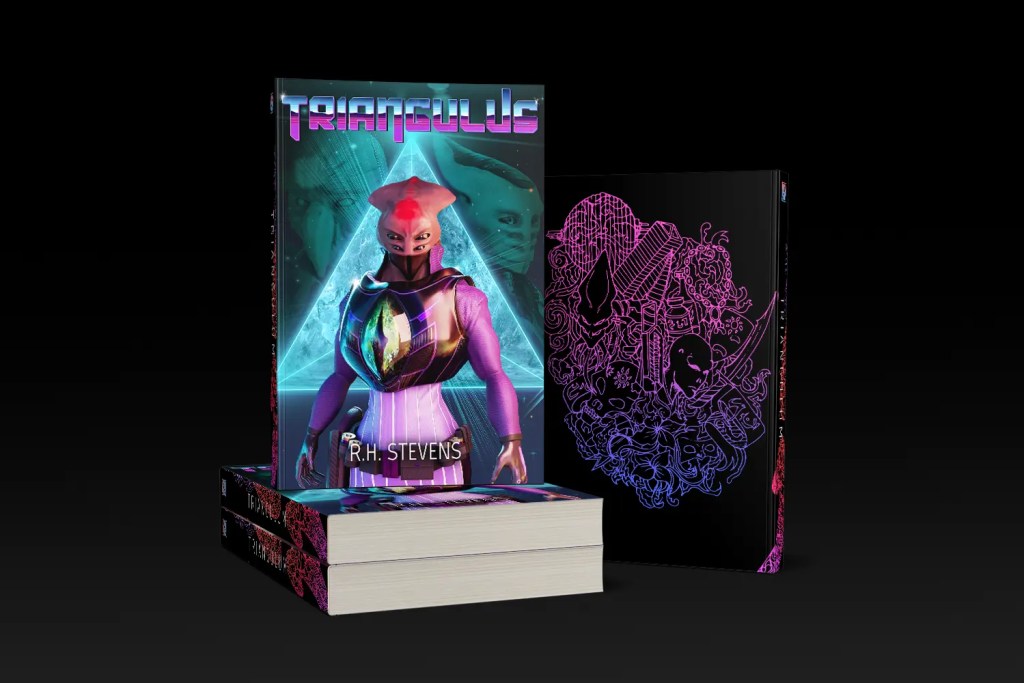
Beta readers are useful, but a lot of indie authors aren’t exactly sure what to expect.
I have been on both sides of the process. I’ve written and published short fiction and novels, read other people’s manuscripts, and yes, I have indeed paid for beta reading services. Some of the feedback I have received has been useful. And some of it, decidedly less so.
For me, useful beta reading comes down to something fairly simple: I should understand how another person experienced my story, why they experienced it that way, and what I might want to look at during the next revision.
First: what is beta reading?
A beta reader approaches a manuscript primarily as a reader. They might leave notes in your manuscript or create a report after reading. A beta reader isn’t there necessarily to correct grammatical errors, rewrite sentences, or restructure your novel. Instead, they will tell you what the experience of reading the story was actually like.
- Did they like the characters?
- Did the worldbuilding make sense?
- Were there continuity snags?
- How did the pacing feel?
- Did the themes land?
- Did the ending feel satisfying?
Beta reading is distinct from a manuscript appraisal, which is more of a high-level analysis of your manuscript.
I have beta read before, and in that capacity, my goal is not to nitpick at things like stray commas or grammatical hiccups. I might point out if there are very awkward constructions in the text, but mostly what I’m there to do is understand the characters, the setting, and the narrative itself. That way, I have actionable feedback for the author. For example, I could say that the setting is evocative and imaginatively drawn, but that the characters inhabiting it are just too contemporary, and it broke my immersion. Or, I might say that the characters are strong and likable, but the pacing was so slow that I lost the thread of the plot halfway through. This is something that an author can use.
“I liked it” isn’t enough
Positive feedback is pleasant to receive. Unfortunately, it is not always particularly useful.
If a beta reader says “I loved the protagonist!” the natural follow-up question is: why?
Was the protagonist funny? Sympathetic? Complicated? Did their motivation make sense? Was there a particular scene where the reader became emotionally invested?
Likewise, “The middle was boring.” doesn’t give the writer much to work with.
Useful feedback tries to identify what produced the reader’s reaction. A beta reader doesn’t need to provide an academic analysis of every paragraph, but if something worked or failed for them, knowing why is considerably more valuable than simply receiving a verdict.
Not too long ago, I paid for beta reading services from a local editing agency that I thought had a good reputation. I received two reports back. One was quite detailed, to be fair, and had useful things to say. The other was not even a full page and felt pretty much like water being squeezed out of a stone. I felt pretty ripped off, to be honest, because I had paid for the feedback and not only did it take a month to get to me, it just didn’t have any ‘meat’. The lesson for me was that reputation alone wasn’t enough. I should also have looked for a sample report so I knew what kind of feedback I was actually purchasing.
A good beta reader should tell you what worked
This is one of the things I think is sometimes forgotten. Writing is hard, lonely, and sometimes can be heartbreaking. I don’t think beta readers should produce a catalogue of defects. There are things that work in a story and authors need to know about them.
Perhaps a character’s voice is especially strong. Perhaps a particular reveal is well foreshadowed. Perhaps the worldbuilding is compelling without becoming overwhelming. Perhaps an emotional scene lands exactly as intended.
Knowing this matters during revision. An author who receives nothing but criticism can easily start “fixing” elements that were already working.
Once the manuscript is published, readers are perfectly entitled to say, “This went nowhere, the characters sucked, and I got bored halfway through.” A beta reader’s job is different. Their feedback should help the author understand why that reaction might occur while there is still time to do something about it.
Character feedback should go beyond “likeable” or “unlikeable”
- A useful reader response to a character should tell you something about how that character came across.
- Did their motivation make sense?
- Did their relationships feel convincing?
- Did their behaviour remain consistent?
- Were they memorable?
- Did the reader interpret them in the way the author intended?
Sometimes the most interesting feedback occurs when the answer is no.
The author might believe they have written a charming rogue, while several readers perceive the character as genuinely unpleasant. That discrepancy is valuable information. It doesn’t automatically mean the author needs to change the character, but it tells them what is actually reaching the page.
I have included in this blog post a sample beta reading report, where you can see my feedback on Ishmael, the lovesick dolphin from ‘Ishmael in Love’ by Robert Silverberg. This main character is a romantic lead, in his way, but much of his romance is simply taking place in his own head. He doesn’t interact with the female lead much at all. This creates an interesting ambiguity. Does Ishmael actually feel love in the sense of reciprocity, or is he more in love with the idea of love? The text actually really supports the idea that Ishmael is just fascinated with romance more than the woman involved.
Plot and pacing feedback needs context
“The pacing was slow” is another observation that becomes much more useful when the reader identifies where and why. I have recently been editing one of my newest novels, which I hope to publish traditionally rather than through my own imprint. However, I received feedback that my intro was too long, and thus I have had to rip it out, rewrite, and restructure.
Beta reading can give authors an early sense for these structural issues. In my case, the intro was so long that it just took too long for the main plot to arrive. Sometimes, the pacing is too fast and the reader is instead thrown into major emotional beats without any setup. Maybe there are subplots in the mix which are interesting on their own but prove a distraction.
When I give feedback on such things, I can’t really prescribe the solution. I think identifying the point where the experience has changed is often enough. I’ll also note that pacing can be very subjective, and so what feels plodding for one reader can be a satisfying slow burn to another. What this feedback does is simply give the author data, and the author can decide what to do with it.
The beta reader should be responding to your story
This is one of the most important principles for me.
There is a difference between saying: “This element isn’t producing the effect I think you intended.”
and:
“I would have written the story differently.”
Every reader has preferences, and a useful beta reader can recognise them. Each genre has its conventions and therefore audience expectations will differ. The influential film critic Roger Ebert said, ‘It’s not what a film is about. It’s how it’s about it.’ I think this holds for novels, games, and comics, too. The author is trying to achieve something. It could be a stirring romantic drama set in Edwardian English, a literary novel about family connections, or a 160k fantasy epic featuring elves, dwarves, and mind flayers (or whatever tentacular telepath you like). The key is whether the author is achieving what they are setting out to do, and whether I, as a reader, think they are hitting that target.
Suggestions can certainly be useful, but they should remain suggestions.
My general preference is to diagnose confidently and prescribe cautiously. If something does not work for me, I want to explain why. If I suggest a possible solution, the author should never feel that it is the only solution.
The ending deserves its own attention
A surprising amount of feedback focuses heavily on the beginning of a manuscript and becomes thinner toward the end. This is a mistake because the ending is where the author makes good on the promises made at the beginning of the story. Did the sub-plots get resolved, or are they dangling? Did the characters go places? And how about that central conflict? Did it reach a satisfying conclusion?
For short fiction especially, the ending can radically alter how the entire story is interpreted. In my beta reading reports, I always include a dedicated Ending Response section so authors can get a sense of what emotional and narrative impression the ending actually left on me.
Feedback should leave you knowing what to do next
A long report isn’t automatically a useful report. Authors need to have some sense of what they should be revising, and why.
I like finishing beta feedback with a small number of areas to consider.
These are not commandments. I’m not the publisher. They are simply the issues that seemed most important after reading the manuscript as a whole.
For a longer novel, it can also be useful to distinguish major issues from secondary observations. An inconsistent protagonist motivation may deserve attention before a minor worldbuilding question on page 173.
As always, it’s up to the author to decide what to change, if anything. The purpose of the report is just to make the decision easier.
What does a beta reader report actually look like?
Every beta reader works differently.
My own reports typically consider the overall reading experience, characters, plot and pacing, themes and ideas, the ending, what worked especially well, areas where I was uncertain, and the issues I think are most worth considering during revision.
The exact contents will naturally vary according to the manuscript. A character-driven literary story may require a very different response from a sprawling science-fiction novel.
I’ve also put together a sample report showing the level and style of feedback I provide.
(The sample uses an existing published story purely as a demonstration of my feedback format. It was not commissioned by or prepared for the story’s author.)
So, what should you expect from a beta reader?
You should come away knowing how another person actually experienced your story. Maybe they liked it, maybe they didn’t, but you should have a clear sense of which parts are working and where readers may encounter problems. You should also have some idea of whether your characters and plot are producing the reactions you intended.
Beta readers aren’t going to tell you how to write your book, but a good one will let you know whether the one they read is the same one that existed in your head.
Looking for another set of eyes on your manuscript? I offer detailed beta reading and manuscript feedback for fiction of any length, with particular experience in science fiction, fantasy, horror and speculative fiction.


