One of the most unexpected parts of making A Binding Unmade: Prologue was the music.
When I first started the project, I did not give a lot of thought to the music.
I knew the game needed atmosphere. I knew the Crosshollows needed a sound of its own: something dreamy, eerie, delicate, and a little magical. But actually making music for a finished project was new territory for me.
Naturally, this meant I fell directly into scope creep.
When it came time to add music and sound effects, it created a host of new tasks.
At first, I thought I would need only a few simple tracks. A title theme, perhaps. A quiet exploration loop. Maybe something for the ending. That seemed sensible.
Then the game began to grow.
Creating an audio manager for the game
In order to contain the audio, I needed to create an audio manager scene, attached to a script. The audio manager scene contains four different audio stream players, two to handle the background music, one to handle UI sound effects, and another to handle in-game sound effects (like the sound of Hawke’s Glamour dissipating). For the background music, two audio stream players are used to allow crossfade between playlists, as each area has its own section of tracks.
The manor needed its own mood. The story scenes needed something softer. The more mysterious moments needed a darker texture. The ending needed warmth. Certain rooms felt as though they wanted their own ambience. Before long, I was no longer thinking of the music as a small extra, but as one of the main ways to make the game feel like the Crosshollows.
I’m sure reading this paragraph you can readily see how the scope creep began.
Diving into FL Studio to make music
A friend of mine is a whizz at FL Studio, and, based on their encouragement, I bit the proverbial bullet and installed FL Studio. A dizzying array of VSTs greeted me, along with a bewildering interface. I will be clear here and say I have absolutely no musical training. I dug deeper into my wallet and purchased two Udemy courses explicitly for the creation of music in games. The first, which I have yet to complete, was likely a bit too optimistic: the erstwhile tutor expected me to create melodies on the fly using my computer keyboard or a MIDI controller.
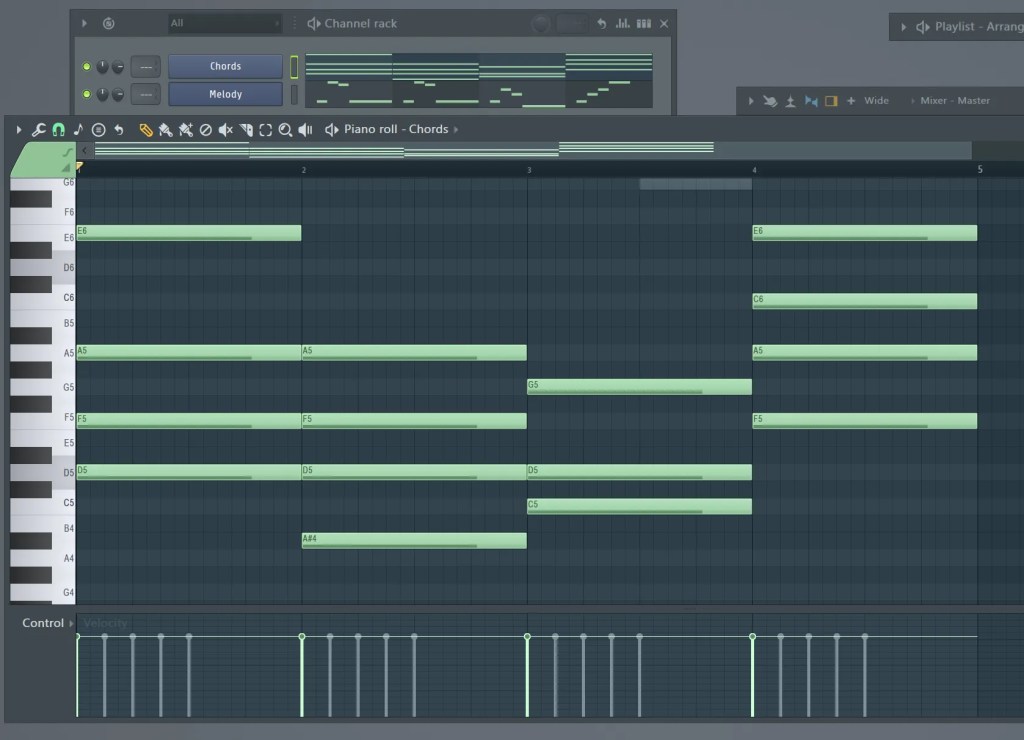
The second was more my speed. It taught how to construct songs using chord progressions. This basic concept underpins a lot of the original tracks you hear in A Binding Unmade: Prologue. In this fashion, chords are set down first, and then a melody is added on the top based on the notes of those chords. This method has some inflexibility, but I think for a beginner is the best way to get started.
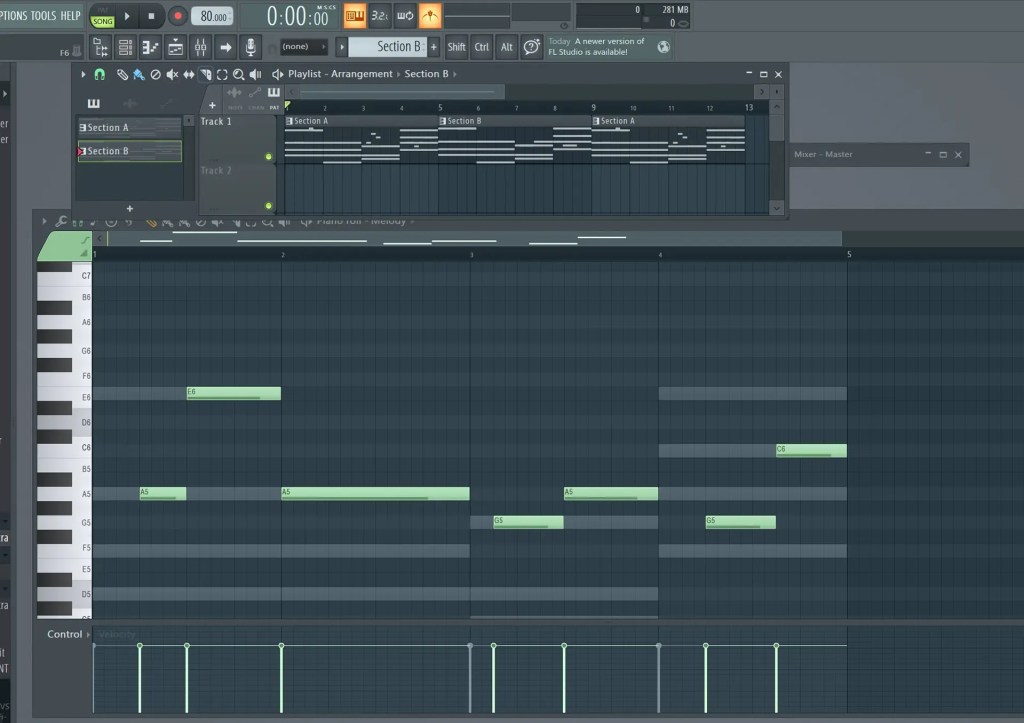
Because this was my first time making music for a project, I had to learn by doing. I experimented with simple melodies, soft pads, harp and guitar textures, flute lines, drones, reverb, and little shimmering sounds that could suggest Arcadian magic and void crystals. I have exclusively used free VSTs and kept the arrangement simple.
Some ideas worked immediately. Many did not. Some sounded too bright, too cheerful, too empty, too busy, or far too dramatic for a quiet hidden object game about an abandoned manor. I’m not going to lie, the frustration actually did get to me, and perhaps I almost shed a tear.
With hidden object game music, less is more
Hidden object game music has an interesting job. It needs to create atmosphere without exhausting the player. The music has to be pleasant enough to sit with while the player searches a scene, but distinctive enough to support the story. Additionally, it cannot constantly demand attention, but it still needs character.
For A Binding Unmade: Prologue, I wanted the music to feel like memory, dust, magic, and old affection. The story is not an action-heavy one. It is about entering a forgotten place, finding traces of the people who lived there, and slowly uncovering the emotional shape of what happened. The music had to support that.
This meant I spent a lot of time softening sounds, adjusting reverb, trying different instruments, and learning how much space to leave. A melody that sounded lovely on its own could become too bright once placed over a hidden object scene. Pads that sounded magical for thirty seconds could become muddy after several minutes.
Game music shapes the player’s experience, sitting beneath reading, searching, thinking, clicking, and wandering. Often, it needs to loop gracefully or fade out in a way that doesn’t feel abrupt.
I think the scope creep lasted two weeks, and I was definitely in a bad mood by the end of it. I’m a person who has a clear vision and likes to do everything themselves, and, when thwarted, gets testy. Was it unrealistic to think I could create an awesome soundtrack on my first go? Yes. Am I going to keep trying? Yes.
Learning FL Studio has been beneficial in other ways, as I also made use of it to construct the ambient soundscapes that you hear in the game, like the rolling wind and flutter of wings which is heard outside of the manor. Despite my irritation at apparently sucking at music (despite obviously being a fan of it), I can’t deny I now have a vested interest.
Advice for those getting started with FL Studio for games
For those looking to dive in, I would recommend the BBC Symphony Orchestra and the DSK VSTs, both free to download. There are lots of free VSTs around. That’s another thing I will say about music, it’s that it requires a lot more of an upfront investment, in my view, than either writing or artwork. I mentioned exactly this to a friend not too long ago, that if you want to draw or write, you can make do with just a pencil and paper. For music production? Good luck. You need instruments of some kind and the time to sit and learn brand new concepts that are like an alien language (what the hell is a diminished fifth?). I have, to my horror, discovered that there are endless VST libraries, many of which are eye-wateringly expensive, and, what’s more, all require user accounts to access and often separate applications to access. I can only surmise that this is done because these companies are understandably concerned about piracy.
Scope creep is just a part of project creation, especially if you are on your own. Adhering to self-imposed deadlines is hard. It will happen, but we have to know when to stop.
Adding music made the prologue feel more complete and more personal. It gave the Crosshollows another layer of identity. It helped the manor feel lonely, magical, and alive in the particular way I wanted. But it also taught me how easily a “small” project can grow once you start caring about every detail.
In the end, I am very glad I made the attempt.
The soundtrack for A Binding Unmade: Prologue represents a first step, but an important one. It taught me a lot about atmosphere, restraint, and the emotional role of music in games. It also gave me a stronger sense of what I want the full version of A Binding Unmade to sound like.
For anyone working on a first small game, I would say this: be careful with scope creep, but do not be afraid to learn a new skill if it genuinely serves the project. Sometimes the extra work becomes part of the soul of the thing.
A Binding Unmade: Prologue is available to play for free on itch.io. If you try it, I hope the music helps draw you into the quiet mystery of the manor.


